Come hear the idea, question it, challenge it, and help determine whether it deserves to move forward.
Find an upcoming conversation and click the event for the time, location, Zoom link, host information, and instructions for attending.
You are not being asked to accept a finished proposal or arrive with a particular position.
At an #IsThereEnough #Money event, participants are invited to:
Agreement is not required. Honest participation is.
America currently relies heavily on taxes placed directly on income, work, business activity, and consumption.
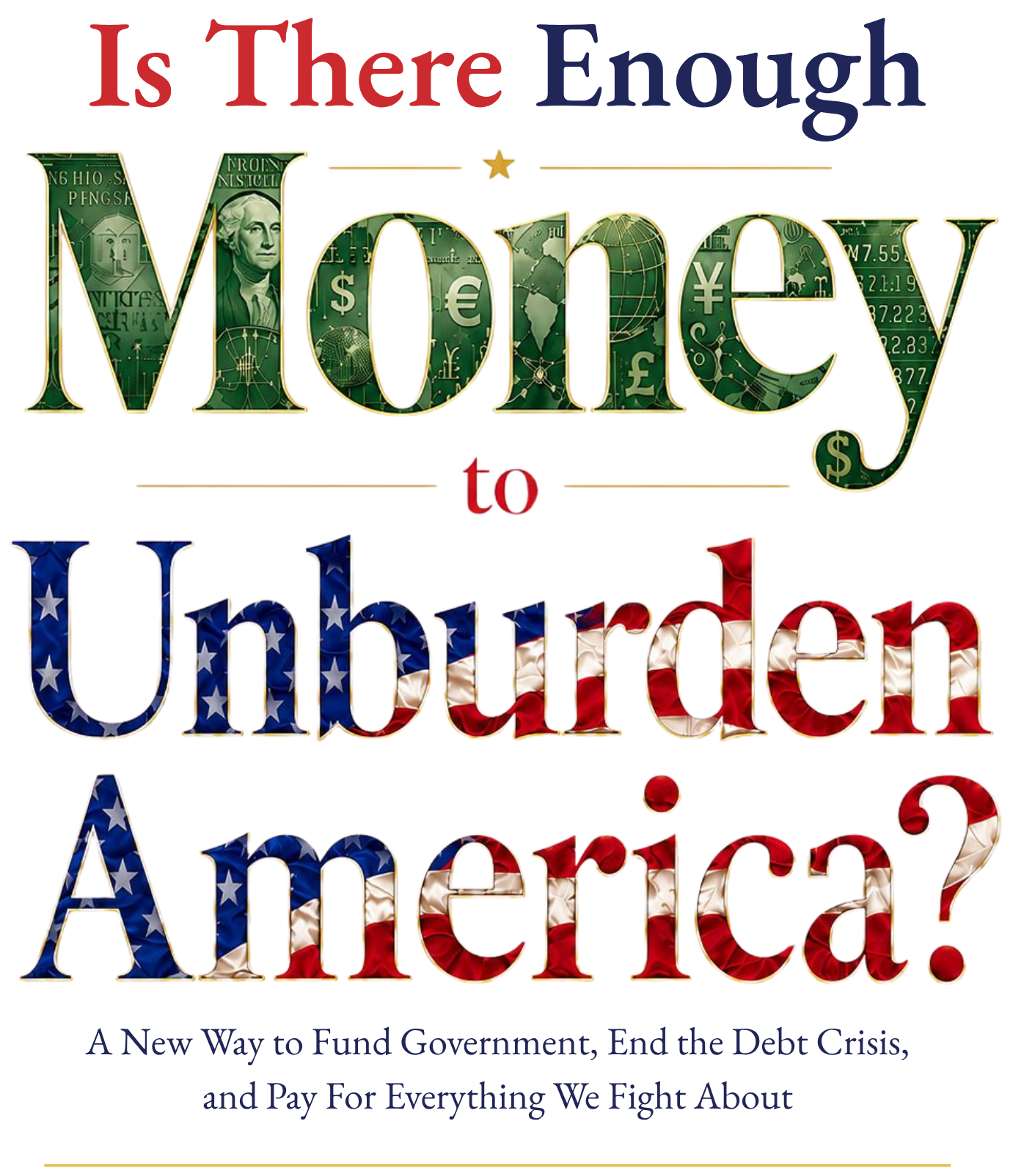
The Unburden America proposal asks whether a very small charge on the movement of money through the financial system could help fund government while reducing the burden placed directly on people and businesses.
The event is where that idea is introduced, examined, questioned, and challenged in public.
This section should remain brief. The event itself, and the Unburden America prelaunch materials, provide the fuller explanation.
The host introduces the question of whether America has enough money moving through its economy to fund the government differently.
Participants hear the basic Unburden America proposal and what it could potentially make possible.
Questions, objections, concerns, alternatives, and improvements are welcomed.
Participants can decide whether they want to follow the work, join the Unburden America prelaunch, attend another conversation, or help bring the discussion to others.
You do not need to be an economist, policy professional, activist, or member of a political organization.
You may arrive convinced that the system must change.
You may doubt that this proposal can work.
You may simply want to understand what is being suggested.
The conversation is stronger when different perspectives are present.
These conversations can be held through:
We can help shape the format, provide supporting material, promote the event, and participate in the conversation.
ASK ABOUT HOSTING A CONVERSATIONThose who want to continue can join the Unburden America prelaunch.You will receive updates and an invitation to create an account, where you can access the proposal, supporting evidence, policy materials, and the work as it develops.
JOIN THE UNBURDEN AMERICA PRELAUNCH